.png)
Harissa Shrimp Omelette with Spinach, Feta and Lemon

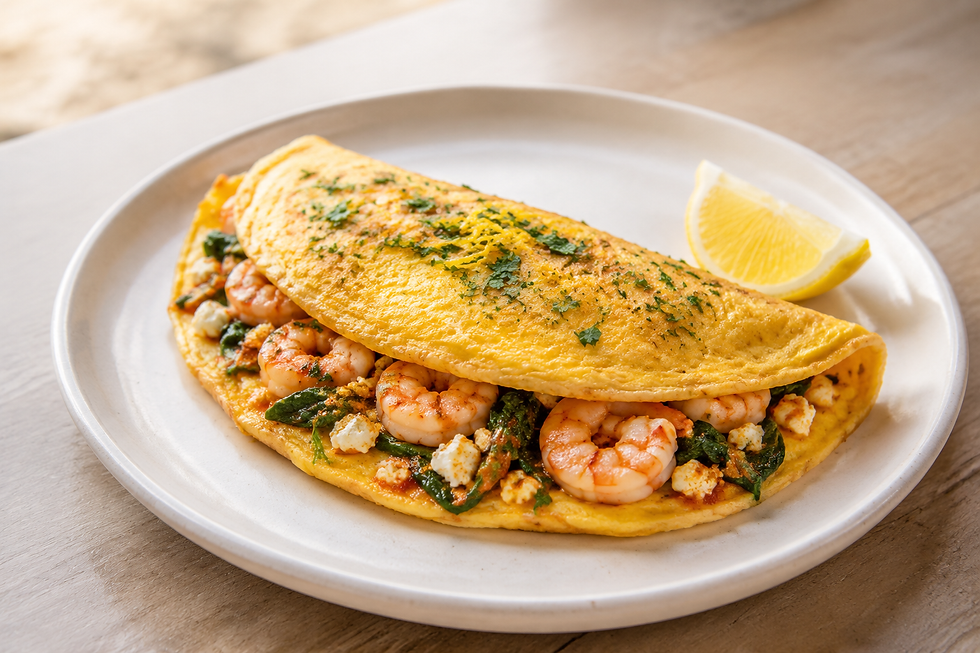
An omelette can be quick without tasting ordinary.
This harissa shrimp omelette brings together tender shrimp, creamy feta, baby spinach and fresh lemon for a meal with warmth, brightness and just enough richness.
Using cooked shrimp keeps the preparation fast, while harissa provides layers of pepper, garlic and spice from a single ingredient. Everything comes together in one skillet in approximately 15 minutes.
It is polished enough for a leisurely brunch, substantial enough for dinner and practical enough to prepare between meetings.
Why you’ll love it
Ready in approximately 15 minutes
Made in one skillet
Provides approximately 28 grams of protein per serving
Contains no added sugar when an appropriate harissa is used
Uses a short list of flavorful ingredients
Includes a non-starchy vegetable
Suitable for breakfast, lunch or dinner
Easy to make mild or spicy
Naturally gluten-free when ingredients are certified
How to Make a Shrimp Omelette

Recipe at a glance
Preparation time | 5 minutes |
Cooking time | 8–10 minutes |
Total time | Approximately 15 minutes |
Yield | 1 large omelette |
Serving size | ½ omelette |
Serves | 2 |
Skillet | 10-inch nonstick skillet |
Difficulty | Easy |
Gluten-free | Yes, when certified |
Make ahead | Filling only |
Ingredients
4 large eggs
1 teaspoon water
¼ teaspoon freshly ground black pepper
2 teaspoons extra-virgin olive oil, divided
5 ounces peeled, cooked shrimp, tails removed and patted dry
1 tablespoon harissa paste
11/2 cups baby spinach
1 ounce feta cheese, crumbled, approximately ¼ cup
1 teaspoon finely grated lemon zest
1 teaspoon fresh lemon juice
1 tablespoon chopped fresh parsley, optional
Instructions
Season the shrimp. Toss the cooked shrimp with the harissa and lemon juice.
Cook the filling. Heat one teaspoon of olive oil in a 10-inch nonstick skillet over medium heat. Add the shrimp and spinach. Cook for approximately two minutes, just until the shrimp is warm and the spinach has wilted. Transfer the filling to a plate and wipe the skillet if needed.
Whisk the eggs. Whisk the eggs with the water, black pepper and lemon zest until evenly blended.
Cook the eggs. Add the remaining teaspoon of olive oil to the skillet. Pour in the eggs and reduce the heat to medium-low. As the edges set, gently draw them toward the center while tilting the pan so the uncooked egg runs underneath.
Fill and fold. Once the eggs are nearly set, arrange the shrimp and spinach over one half. Sprinkle with feta, fold the other half over the filling and cook until the eggs are fully set.
Serve. Slide the omelette onto a serving plate, sprinkle with parsley if desired and cut it in half. Serve immediately.
For food safety, egg dishes should reach 160°F in the center. The previously cooked shrimp should be heated through without being cooked long enough to become rubbery.
The Details That Make This Omelette Exceptional
Why This Shrimp Omelette Has So Much Flavor
This shrimp omelette relies on harissa to provide pepper, garlic and spice in one quick addition. Lemon lifts the richer eggs and feta, while spinach softens into the filling without requiring chopping.
Pat the shrimp dry
Removing surface moisture allows the harissa to coat the shrimp and prevents excess liquid from entering the omelette.
Warm rather than recook the shrimp
The shrimp is already cooked. It needs only enough time to become warm; prolonged cooking will make it firm and rubbery.
Use medium-low heat for the eggs
High heat can brown the outside before the center has finished cooking. Gentler heat produces a more tender omelette.
Check the harissa
Harissa varies considerably in heat, salt and ingredients. Choose one without added sugar and begin with less if you are unfamiliar with the brand.
Add feta strategically
One ounce supplies creaminess and flavor without overwhelming the shrimp or making the omelette excessively salty.
What to serve with it
The omelette already provides protein and some non-starchy vegetables. To create a more complete meal, serve each half with additional vegetables such as:
Arugula dressed with lemon and olive oil
Sliced cucumber and tomatoes
Roasted asparagus
Sautéed zucchini
Steamed green beans
Grilled eggplant
If a quality carbohydrate fits the individual meal plan, consider:
One slice of dense whole-grain toast
A small serving of lentils
Half a cup of berries
A small roasted sweet potato
Ingredient alternatives
Don’t have harissa?
Use one teaspoon of smoked paprika mixed with a small pinch of red pepper flakes and ½ teaspoon olive oil.
Prefer a milder omelette?
Use two teaspoons of harissa instead of one tablespoon.
Don’t have feta?
Use soft goat cheese. It creates a creamier, slightly less salty filling.
Want a different green?
Replace the baby spinach with arugula. Add it at the very end so it wilts without becoming watery.
Don’t eat shrimp?
Use approximately four ounces of sliced cooked chicken. Heat poultry leftovers to 165°F.
Want more freshness?
Finish the omelette with chopped cilantro or mint instead of parsley.
Make-ahead shortcut
Toss the shrimp with the harissa and refrigerate it in a covered container for up to one day.
When it is time to eat, the only remaining preparation is wilting the spinach, whisking the eggs and assembling the omelette.
Do not combine the raw eggs with the filling in advance.
Storage and reheating
An omelette is best served immediately.
If needed, refrigerate leftovers in a covered container for up to two days. Reheat gently in a covered skillet over low heat or in the microwave in short intervals until the center reaches 165°F.
The shrimp can become firm when reheated repeatedly, so prepare only the quantity you expect to use.
Why this can support a diabetes-conscious meal
Eggs and shrimp provide protein, while spinach contributes a non-starchy vegetable.
The omelette contains no bread, potatoes or refined flour, and the recipe has a modest estimated carbohydrate content.
That doesn't mean everyone with Diabetes should avoid carbohydrate or eat the omelette by itself. The appropriate accompaniments depend on medication, activity, glucose patterns, nutritional requirements and personal preference.
Harissa, feta and cooked shrimp can also contain substantial sodium. Comparing labels and choosing lower-sodium products where available can make a meaningful difference.
Nutrition Value
Per serving: one-half of the omelette
Calories: 275
Protein: 28 g
Carbohydrate: 4 g
Fiber: 1 g
Total fat: 16 g
Nutrition values are estimates. The harissa, feta and shrimp used will significantly affect sodium.
Frequently asked questions
Can I use frozen shrimp?
Yes. Thaw cooked frozen shrimp completely, drain it and pat it dry before adding the harissa.
Can I use raw shrimp?
Yes, although the recipe will take slightly longer. Cook the shrimp completely before adding the spinach. Shrimp should be pearly and opaque.
Is harissa very spicy?
It depends on the brand. Some versions are gently smoky, while others are quite hot. Begin with two teaspoons if you prefer moderate heat.
Why did my omelette release water?
The shrimp may not have been dried thoroughly, or the spinach and filling may have remained in the pan too long. Transfer the filling to a plate before cooking the eggs.
Can I make two smaller omelettes?
Yes. Divide the ingredients evenly and prepare the omelettes one at a time in an 8-inch skillet. Each smaller omelette is one serving.
Can I omit the cheese?
Yes. Increase the lemon zest slightly and finish with fresh herbs to preserve the bright flavor.
Enjoy!


Comments