.png)
Garlic-Parmesan Green Beans with Lemon


These garlic-Parmesan green beans combine crisp-tender green beans, fresh garlic, lemon and finely grated Parmesan in a simple, flavorful side dish.
Briefly steaming the beans in the skillet cooks them evenly without making them soft. Adding the garlic near the end protects its flavor, while lemon zest and juice brighten the savory Parmesan.
The recipe is ready in approximately 15 minutes and provides a generous serving of non-starchy vegetables. Serve it with chicken, fish, tofu or another protein to complete the meal.
Why You’ll Love It
Ready in approximately 15 minutes
Uses one skillet
Serves two
Provides approximately one cup of green beans per serving
Contains no added sugar
Uses familiar, easy-to-find ingredients
Pairs well with many different proteins
Naturally gluten-free when all packaged ingredients are verified
Easy to make vegetarian
How to Make Garlic-Parmesan Green Beans with Lemon
Recipe at a Glance
Preparation time | 5 minutes |
Cooking time | 8–10 minutes |
Total time | Approximately 15 minutes |
Yield | Approximately 2 cups |
Serving size | Approximately 1 cup |
Serves | 2 as a side dish |
Equipment | Large skillet with lid |
Difficulty | Easy |
Make ahead | Best freshly cooked |
Freezer friendly | Not recommended |
Ingredients
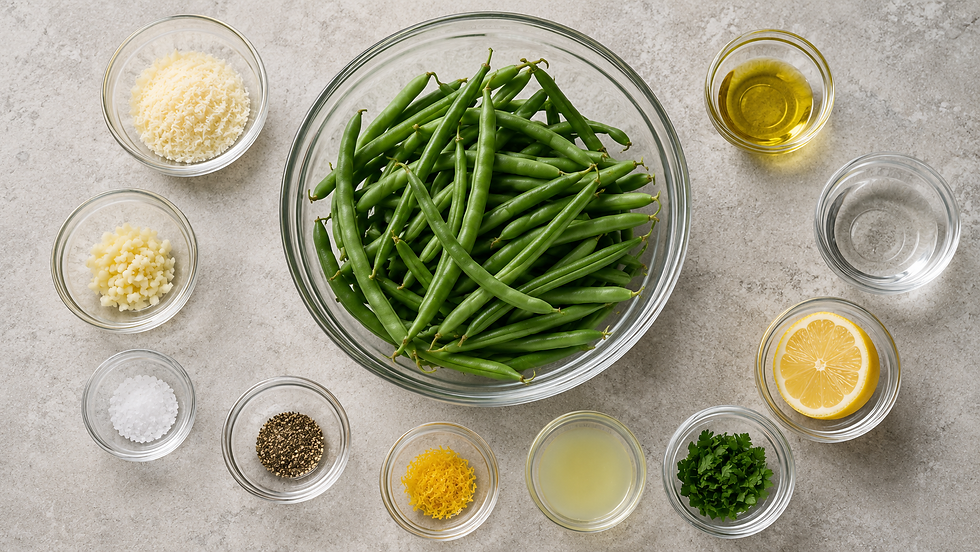
8 ounces or 225 grams fresh green beans, approximately 3 cups before cooking
2 teaspoons extra-virgin olive oil
2 tablespoons water
1 large garlic clove, finely minced
1/8 teaspoon fine sea salt, or to taste
1/4 teaspoon freshly ground black pepper
1/2 teaspoon finely grated lemon zest
1 teaspoon fresh lemon juice, plus more to taste
2 tablespoons finely grated Parmesan cheese
Chopped fresh parsley, for serving, optional
Instructions
Prepare the green beans. Wash and dry the green beans thoroughly. Trim away the stem ends, leaving the tapered ends intact if desired.
Warm the olive oil. Place a large skillet over medium heat. Add the olive oil and allow it to warm for approximately 20 seconds.
Sauté the green beans. Add the green beans and toss to coat them lightly with the oil. Cook for approximately two minutes, stirring occasionally.
Steam briefly. Add two tablespoons of water and immediately cover the skillet. Cook for three to four minutes.
Check the texture. Remove the lid carefully and test one green bean. It should be bright green and tender enough to pierce with a fork while retaining a little bite.
Evaporate the remaining water. Continue cooking uncovered for one to two minutes, stirring frequently, until the remaining water has evaporated.
Add the garlic. Move the green beans toward the sides of the skillet. Add the minced garlic to the centre and cook for approximately 20 seconds, just until fragrant. Toss the garlic and green beans together.
Season the beans. Add the salt and black pepper. Toss for approximately 30 seconds and remove the skillet from the heat.
Add the lemon. Sprinkle the lemon zest over the green beans and drizzle with the fresh lemon juice. Toss to distribute the flavors evenly.
Finish with Parmesan. Add the finely grated Parmesan while the beans are still warm and toss gently. Some of the cheese will lightly coat the beans while the remainder stays visible.
Serve. Divide between two plates. Finish with chopped parsley and an additional squeeze of lemon if desired.
The Details That Make These Green Beans Exceptional
Choose fresh, firm green beans
Look for beans that are brightly coloured, firm and free from soft or deeply blemished areas. Very thick beans require slightly more cooking time.
Dry the beans well
Excess water prevents the beans from sautéing properly and can cause the olive oil to splatter. Wash them in advance and pat them dry before cooking.
Steam before adding the garlic
The brief covered cooking step softens the beans without requiring additional oil. Adding the garlic afterward prevents it from burning during steaming.
Watch the garlic closely
Finely minced garlic cooks quickly. Approximately 20 seconds in the warm skillet is enough to release its aroma without making it brown or bitter.
Use finely grated Parmesan
Finely grated cheese distributes more evenly than large shavings. Add it after removing the skillet from the heat so it lightly coats the beans rather than sticking to the pan.
Add lemon at the end
Fresh lemon juice loses some of its brightness when cooked for too long. Adding the juice and zest after the skillet leaves the heat preserves their fresh flavor.
Avoid overcooking the beans
The beans should remain bright green and retain a little bite. Prolonged cooking creates a softer texture and duller colour.
How to Turn It Into a Complete Meal
As written, this is a vegetable side dish rather than a complete meal.
Serve it with:
Grilled, roasted or pan-seared chicken
Baked or grilled salmon
Garlic shrimp
Lean beef or pork tenderloin
Baked or pan-seared tofu
Tempeh
A vegetable and herb omelette
A measured serving of brown rice, quinoa or another fiber-rich grain alongside the chosen protein
Adding a protein or carbohydrate changes the nutritional values and total carbohydrate of the meal.
Ingredient Alternatives
No fresh green beans?
Frozen whole green beans can be used, although they will have a softer texture. Thaw them and pat them dry before cooking. Skip the covered steaming step and sauté until heated through.
Prefer another cheese?
Pecorino Romano can replace the Parmesan, although it generally tastes saltier. Reduce or omit the added salt until the finished dish has been tasted.
Need a dairy-free version?
Omit the Parmesan and finish the beans with one tablespoon of toasted sliced almonds, chopped walnuts or nutritional yeast. Each substitution changes the nutritional values.
Want more crunch?
Add one tablespoon of toasted sliced almonds or chopped walnuts immediately before serving.
Prefer a little heat?
Add a pinch of crushed red pepper flakes with the garlic.
No fresh parsley?
Use chopped basil, chives or a small amount of fresh thyme. The herbs are optional, so they can also be omitted.
Need less sodium?
Omit the added salt and use a smaller amount of Parmesan. Build flavor with additional lemon zest, black pepper, garlic and fresh herbs.
Want a richer flavor?
Replace one teaspoon of olive oil with one teaspoon of unsalted butter. This adds buttery flavor while keeping the total amount of added fat measured.
Make-Ahead Instructions
Wash, trim and thoroughly dry the green beans up to two days in advance. Refrigerate them in a covered container lined with a clean paper towel.
The garlic can be minced and the Parmesan grated earlier in the day. Store each separately in the refrigerator.
For the best colour and texture, cook the green beans shortly before serving.
Storage Instructions
Allow leftovers to cool and transfer them to an airtight container within two hours.
Refrigerate for up to three days.
The beans become softer during storage but remain suitable for reheating or adding to a salad, omelette or grain bowl.
Reheating Instructions
Stovetop
Place the green beans in a skillet over medium-low heat. Add one teaspoon of water, cover and warm for one to two minutes. Remove the lid and toss until heated through.
Microwave
Transfer one serving to a microwave-safe dish. Heat in 20- to 30-second intervals until hot.
Avoid prolonged reheating, which can soften the beans and cause the Parmesan to become oily.
Freezer Instructions
Freezing is not recommended. Green beans lose much of their crisp texture after freezing and thawing, and the Parmesan coating does not reheat as evenly.
Dr. Cheryl’s Holistic Perspective: Why This Recipe Supports a More Balanced Meal
Green beans are commonly grouped with non-starchy vegetables. They contribute fiber, vitamin C, vitamin K and other nutrients, while Parmesan provides protein, calcium and savory flavor in a measured amount. Nutritional information for individual ingredients is available through USDA FoodData Central.
The National Institute of Diabetes and Digestive and Kidney Diseases includes green beans among the non-starchy vegetables that can fill approximately half the plate when using the plate method.
This recipe makes that vegetable portion flavorful without relying on a sugary glaze or a large amount of added fat. Olive oil and Parmesan add richness, while garlic, lemon and black pepper build flavor with relatively small quantities of salt and cheese.
Parmesan naturally contributes sodium. Anyone following a sodium-restricted eating plan should adjust the cheese and added salt according to their individual guidance.
Individual glucose responses differ. Consider the portions and composition of the complete meal, particularly when the green beans are served with a protein and carbohydrate-containing food.
Nutritional Values
Per serving: approximately 1 cup or one-half of the recipe
Calories: 100
Carbohydrate: 9 g
Protein: 4 g
Fiber: 3 g
Fat: 6 g
Nutrition values are estimates. The size of the serving, amount of Parmesan retained on the beans and ingredient brands affect the final values. Sodium is not estimated because Parmesan and added-salt measurements vary. Optional parsley and additional lemon juice are not included.
Frequently Asked Questions
Are garlic-Parmesan green beans a complete meal?
No. This recipe is designed as a vegetable side dish. Add chicken, fish, tofu, eggs or another substantial protein. Include an appropriate portion of a fiber-rich carbohydrate if it suits the individual meal plan.
Are green beans considered a non-starchy vegetable?
Yes. Green beans are generally grouped with non-starchy vegetables in Diabetes meal-planning guidance.
Do green beans contain carbohydrates?
Yes. Non-starchy vegetables still contain some carbohydrate. This recipe provides an estimated nine grams of total carbohydrate and three grams of fiber per serving.
Can frozen green beans be used?
Yes, although the final texture will be softer. Thaw the beans and pat them dry, then sauté them without the covered steaming step.
Can canned green beans be used?
They are not recommended for this recipe because they are already fully cooked and much softer. Canned green beans can also contain substantial sodium unless a no-salt-added variety is selected.
Why is the garlic added near the end?
Garlic cooks much faster than green beans. Adding it after the beans have steamed allows it to become fragrant without burning or developing a bitter taste.
Can bottled lemon juice be used?
Fresh lemon juice is recommended because the recipe also uses lemon zest. If necessary, bottled lemon juice can replace the fresh juice, but the flavor will be less vibrant.
Is this recipe gluten-free?
The core ingredients are naturally gluten-free. Check the Parmesan and any packaged seasonings when certification or avoidance of cross-contact is important.
Can the recipe be made dairy-free?
Yes. Omit the Parmesan and finish the beans with toasted nuts, seeds or nutritional yeast. The flavor and nutritional values will change.
Can this recipe be doubled?
Yes. Use a sufficiently large skillet or cook the beans in two batches. Overcrowding the skillet traps moisture and can make the beans softer.
Enjoy!


Comments