Why Gentle Movement Supports Heart Health in Diabetes
When most people hear the word movement, they picture workouts, gym sessions, or structured routines. For many people living with diabetes, that expectation alone can feel tiring before they even begin.
But from a cardiovascular standpoint, your heart doesn’t need intense exercise to benefit from movement.
What it needs most is circulatory support.
And that support often comes from small, gentle movement done consistently throughout the day.
Why Gentle Movement Matters More in Diabetes
Your heart is not working alone to move blood.
It depends on support from your muscles, especially those in your legs and core. Every time those muscles contract, they help push blood back toward the heart. This natural assist system is known as the muscle pump.
When circulation is efficient, the heart doesn’t have to work as hard.
In diabetes, circulation can become less responsive over time. Blood may move more slowly, vessels may be less flexible, and recovery signals may take longer to activate. When this happens, the heart compensates by increasing pressure and effort.
Gentle movement helps reduce that compensation.
👉 If you’d like to understand how circulation challenges develop over time, you can read more in our guide on circulation issues in diabetes.
Why Sitting Still Increases Heart Workload
Stillness might feel restful, but long periods without movement can make circulation less efficient.
When muscles stay inactive for too long:
- Blood pools more easily in the lower body
- Vascular resistance increases
- Oxygen delivery slows
- The heart must pump harder
Even people who exercise regularly can experience circulatory strain if much of their day is spent seated.
This is why gentle movement throughout the day matters just as much as scheduled exercise.
The Heart Responds More to Frequency Than Intensity
One of the biggest misconceptions about heart health is that intensity is required for benefit.
In reality, the heart responds strongly to consistency.
Small movements repeated throughout the day help:
- Improve circulation efficiency
- Support glucose uptake
- Lower pressure demand on the heart
- Reduce fatigue
You don’t need to raise your heart rate dramatically.
You simply need to help blood move.
A Simple Circulation Routine You Can Do Anywhere
This gentle routine supports circulation without strain. It can be done seated, standing, at your desk, or during daily activities.
5-Minute Circulation Support Routine
1. Ankle Pumps — 1 minute
Slowly flex and point your feet.
This activates the calf muscles, one of your body’s strongest circulatory helpers.
2. Gentle March — 1–2 minutes
Lift one knee at a time in a slow rhythm.
This supports blood return to the heart using large muscle groups.
3. Arm Swings or Circles — 1 minute
Light arm motion supports upper-body circulation and releases tension.
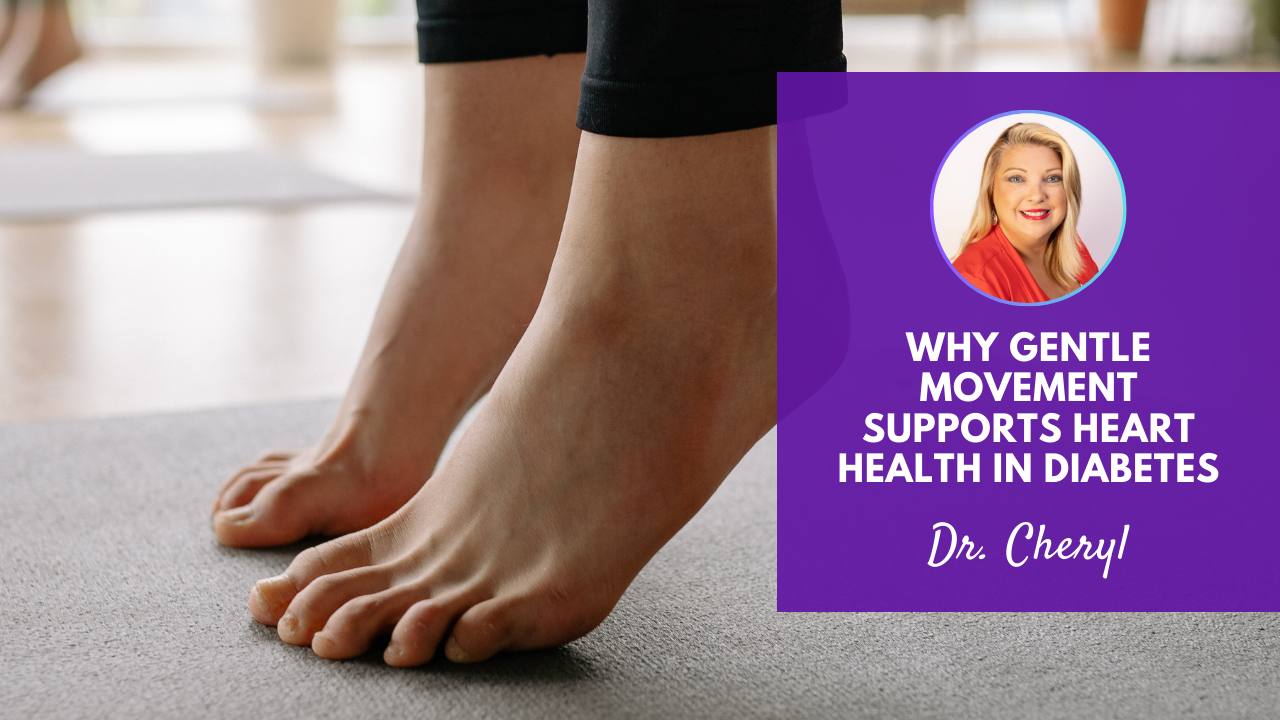
4. Heel-to-Toe Shifts — 1 minute
Shift your weight forward and back slowly.
This encourages vascular responsiveness and balance.
5. Calm Breathing Finish — 1 minute
Inhale gently through your nose.
Exhale slightly longer than you inhale.
This signals recovery to your nervous system and reduces cardiovascular demand.
When Gentle Movement Helps Most
You may notice the greatest benefit when you use small movements:
- After meals
- During long work sessions
- When energy dips
- In the evening
Used regularly, these brief moments reduce how much your heart has to compensate throughout the day.
Why This Is Real Heart Care
Movement doesn’t need to be impressive to be effective.
In diabetes, heart support is not about pushing harder.
It’s about making circulation easier.
Gentle movement done consistently:
- Improves circulation
- Supports blood sugar handling
- Reduces pressure demand
- Preserves energy
Over time, these small supports add up to meaningful cardiovascular relief.
FAQ
Is gentle movement really enough to support heart health?
Yes. The heart benefits most when circulation flows easily. Frequent gentle movement supports blood return and reduces strain, which helps the heart work more efficiently throughout the day.
What if I already exercise regularly?
Structured exercise is valuable, but long periods of sitting can still slow circulation. Gentle movement between activities helps maintain steady blood flow and complements your workouts.
What if movement feels tiring to start?
That’s common. Many people living with diabetes notice that beginning movement feels hardest before they start. Once circulation increases, movement often feels easier. Starting small helps your body transition comfortably.
👉 You can learn why that happens in our article on why movement can feel hard to begin.
How often should I move?
Ideally every 60–90 minutes if you’ve been sitting. Even one or two minutes can support circulation.
Can this help if I have limited mobility?
Yes. These movements can be done seated or standing and adjusted to your comfort level. The goal is circulation support, not intensity.
Start Smaller Than You Think
If movement has ever felt intimidating or exhausting, you’re not alone. Many people assume they need a full routine to benefit.
In reality, your body responds powerfully to small, steady support.
If you’d like guidance choosing movements that match your energy, schedule, and comfort level, you’re welcome to book a complimentary Diabetes Wellness Connection Call. It’s a supportive conversation designed to help you understand what your body needs most right now.
This conversation is designed to help you identify the most supportive next step without pressure or overwhelm.
ABOUT THE AUTHOR

Dr. Cheryl
Dr. Ac., C.H., RDH
Dr. Holistic Studies, Dr. Acupuncture
Diabetes Wellness Strategist & Coach
Creator & CEO of Holistic Diabetes Solutions
8 X International Best-Selling Author
As a woman living with diabetes for over 30 years, Dr. Cheryl understands the journey firsthand. When she was diagnosed, she received the same outdated advice her grandmother was given for over four decades, who relied primarily on medication, suffered from deteriorating health and eventually lost her life to diabetes. Fueled by this experience, Dr. Cheryl was compelled to seek a better way. Through countless research studies and trials, she developed the winning holistic approach: the Diabetes Success System which merges traditional wisdom with today’s best holistic self-care practices. It has revolutionized diabetes management by providing a trusted way to maintain consistent and predictable healthy blood sugar levels.
_______________________
PROFESSIONAL DISCLAIMER
The material and content contained in this platform is for overall general diabetes health and education information only. It is not intended to constitute medical advice or to be a substitution for professional medical recommendations, diagnosis or treatment. All specific medical questions or changes you make to your medication and/or lifestyle should be discussed and addressed with your primary healthcare provider. Having the right mindset, doing the right movements at the right times of day, and eating foods that help keep blood sugar, insulin, and inflammation manageable can dramatically reduce your risk of the all-too-common complications of Diabetes, increase your energy levels and have you feeling your best every day.