.png)
Roasted Tomato and Basil Soup With Goat Cheese Crumble


Roasting ripe tomatoes concentrates their natural flavor and gives this tomato and basil soup a deeper, more rounded character than a stovetop-only version.
Fresh basil brightens the finished soup, while a measured goat cheese crumble adds creamy contrast and a gentle tang. The result feels elegant enough for guests and remains simple enough for an everyday lunch or light dinner.
Serve the soup as a starter or pair it with a substantial protein and a high-fiber accompaniment to create a more complete meal.
Why You’ll Love It
Makes 4 generous servings
Uses fresh roasted tomatoes
Contains no added sugar
Includes fresh basil
Uses one sheet pan and one pot
Provides approximately 4 grams of fiber per serving
Freezer friendly when the goat cheese is added after reheating
Easy to prepare ahead
Naturally gluten-free when the broth is certified gluten-free
Easily adapted for a dairy-free eating pattern
How to Make Roasted Tomato and Basil Soup
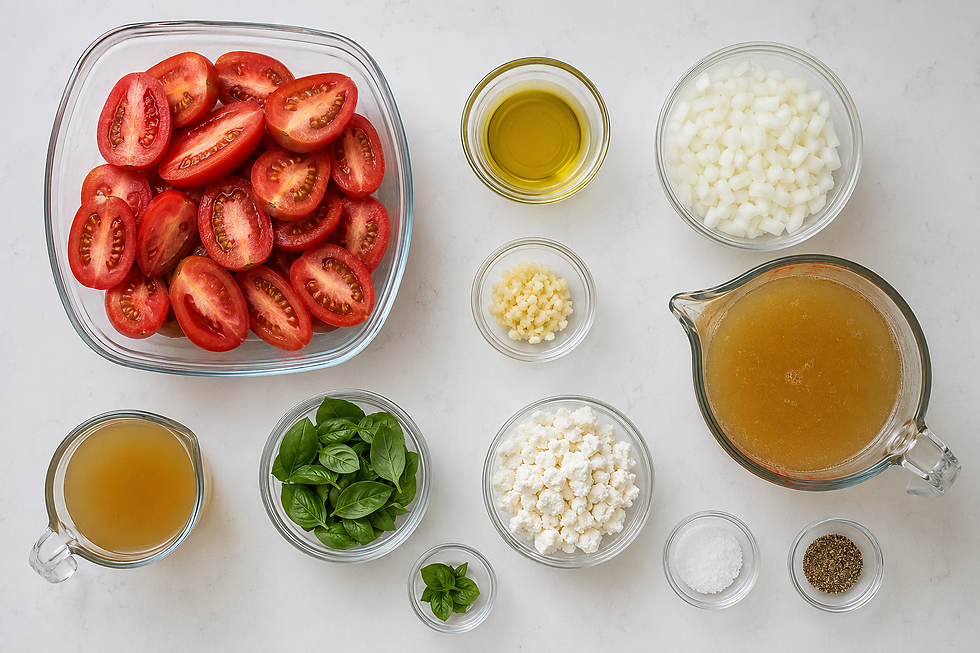
Recipe at a Glance
Preparation time | 15 minutes |
Roasting time | 30 to 35 minutes |
Stovetop time | 25 minutes |
Total time | Approximately 1 hour 10 minutes |
Yield | Approximately 6 cups |
Serving size | Approximately 1½ cups |
Serves | 4 |
Equipment | Rimmed sheet pan; large pot or Dutch oven; immersion blender or countertop blender |
Difficulty | Easy |
Make ahead | Yes |
Freezer friendly | Yes, without the goat cheese topping |
Ingredients
2 pounds ripe tomatoes, such as Roma or vine-ripened tomatoes, halved
2 tablespoons extra-virgin olive oil, divided
1 medium yellow onion, chopped
3 garlic cloves, minced
3 cups low-sodium vegetable broth, plus up to 1 additional cup as needed
1/2 cup lightly packed fresh basil leaves, plus more for garnish
1/4 teaspoon fine sea salt, divided, plus more after tasting if needed
1/4 teaspoon freshly ground black pepper, divided
4 ounces soft goat cheese, crumbled
Instructions
Preheat the oven. Heat the oven to 400°F. Line a rimmed sheet pan with parchment paper for easier cleanup, if desired.
Season the tomatoes. Arrange the tomato halves cut-side up on the sheet pan. Drizzle with one tablespoon of olive oil and season with half of the salt and black pepper.
Roast. Roast for 30 to 35 minutes, until the tomatoes have softened, released some of their juices and developed lightly browned edges.
Soften the onion. While the tomatoes roast, heat the remaining tablespoon of olive oil in a large pot over medium heat. Add the chopped onion and cook for six to eight minutes, stirring occasionally, until soft and translucent.
Add the garlic. Stir in the minced garlic and cook for approximately 30 seconds, until fragrant.
Add the tomatoes and broth. Carefully transfer the roasted tomatoes and their juices to the pot. Add three cups of vegetable broth and the remaining salt and pepper.
Simmer. Bring the soup to a gentle boil, then reduce the heat to low. Partially cover and simmer for 20 minutes.
Add the basil. Remove the pot from the heat and stir in the fresh basil.
Blend until smooth. Use an immersion blender to puree the soup directly in the pot. For a countertop blender, allow the soup to cool slightly and blend it in small batches, following the manufacturer’s directions for hot liquids.
Adjust the consistency. Return the soup to low heat. Stir in additional broth, ¼ cup at a time, until it reaches the desired consistency.
Taste and serve. Taste and adjust the salt, pepper or basil. Divide among four bowls and top each serving with one ounce of crumbled goat cheese and additional basil.
The Details That Make This Soup Exceptional
Choose ripe tomatoes
Tomatoes that smell fragrant and feel heavy for their size produce the fullest flavor. Roma tomatoes create a thicker soup, while juicy vine-ripened tomatoes create a lighter consistency.
Roast cut-side up
Keeping the cut surface facing upward allows the tomatoes to soften and concentrate without losing all of their juices onto the pan.
Divide the olive oil
One tablespoon coats the tomatoes and one tablespoon softens the onion. This corrects the original method, which called for oil in both steps without dividing the listed amount.
Give the onion enough time
A thoroughly softened onion creates a sweeter, more rounded base. Garlic is added later because it cooks much faster.
Start with three cups of broth
Tomatoes release different amounts of liquid. Starting with three cups prevents a thin soup. More broth is added only after blending, when the final consistency is easier to judge.
Add basil after simmering
Fresh basil retains more of its fragrance and bright color when it is added after the pot leaves the heat.
Add goat cheese at serving
Keeping the goat cheese as a crumble creates small pockets of tangy creaminess. Stirring it into the pot would make the flavor less distinct and complicate dairy-free servings.
What to Serve With It
Serve the soup:
Alongside grilled chicken, fish, tofu or tempeh
With a white bean and arugula salad
With roasted chickpeas
With a small whole-grain sandwich containing a substantial protein
With one slice of dense whole-grain toast and a boiled egg
Before a meal featuring non-starchy vegetables and lean protein
With cucumber, leafy greens and a lemon-olive oil dressing
The soup contains carbohydrate from tomatoes and onion. Goat cheese adds some protein and fat, although one ounce is not enough to make the soup a complete protein-rich meal by itself.
Ingredient Alternatives
No fresh tomatoes?
Use two 28-ounce cans of whole peeled tomatoes without added sugar. Drain and reserve some of the liquid, roast the tomatoes for approximately 25 minutes and add reserved liquid only as needed.
Prefer a dairy-free version?
Omit the goat cheese or use a small spoonful of unsweetened plant-based yogurt selected for its ingredient list and flavor.
Prefer less saturated fat or sodium?
Use two ounces of goat cheese instead of four, providing approximately ½ ounce per serving.
No fresh basil?
Stir in one to two teaspoons of dried basil with the broth. The finished flavor will be less fresh, so add chopped parsley or another fresh herb at serving if available.
Want a smoky flavor?
Add ½ teaspoon smoked paprika with the garlic.
Prefer a brighter finish?
Stir in one to two teaspoons of balsamic vinegar or fresh lemon juice after blending. Choose balsamic vinegar without added sweeteners.
Want additional protein and fiber?
Blend one cup of rinsed, no-salt-added white beans into the soup. Add extra broth as needed and recalculate the nutritional values.
Make-Ahead Instructions
Prepare and blend the soup up to three days before serving.
Cool it promptly and refrigerate it in a covered container. Store the goat cheese separately and add it only after reheating.
Fresh basil for garnish should also be stored separately.
Storage Instructions
Divide the soup into shallow containers so it cools efficiently.
Refrigerate within two hours and use within three to four days.
Store the goat cheese in a separate covered container.
Reheating Instructions
Stovetop
Warm the soup in a saucepan over medium-low heat, stirring occasionally, until steaming hot throughout. Add a small amount of broth if it has thickened.
Microwave
Transfer one serving to a microwave-safe bowl. Cover loosely and heat in 60-second intervals, stirring between intervals, until steaming hot.
Add the goat cheese and fresh basil after reheating.
Freezer Instructions
Freeze the soup without the goat cheese.
Cool completely and transfer to freezer-safe containers, leaving room for expansion. Freeze for up to three months.
Thaw overnight in the refrigerator and reheat gently. Blend briefly if the texture separates, then add fresh basil and goat cheese at serving.
Dr. Cheryl’s Holistic Perspective: Why This Recipe Supports a More Balanced Meal
Tomatoes, onion and basil contribute plant compounds, vitamins and minerals, while the tomatoes and onion also contribute carbohydrate and fiber. Nutrient values for these ingredients are available through USDA FoodData Central.
The National Institute of Diabetes and Digestive and Kidney Diseases presents non-starchy vegetables as half of the Diabetes plate method, with protein and a higher-fiber carbohydrate completing the plate. This soup contributes vegetables, yet its pureed texture and modest protein content make thoughtful accompaniments important when it is served as a meal.
Goat cheese adds flavor, protein, fat and sodium. The measured one-ounce crumble gives each bowl a satisfying finish without allowing the cheese to dominate the tomatoes. Anyone following individualized guidance for sodium or saturated fat should adjust the quantity accordingly.
Roasting makes the tomatoes taste richer without adding sugar. No single ingredient protects against Diabetes complications or independently determines glucose response. Serving size, the entire meal, medication, movement and individual response all remain relevant.
Nutritional Values
Per serving: approximately 1½ cups with 1 ounce goat cheese
Calories: 240
Carbohydrate: 15 g
Protein: 8 g
Fiber: 4 g
Fat: 16 g
Nutrition values are estimates. Tomato variety, broth brand, goat cheese and the amount of oil retained after roasting affect the final values. Sodium varies considerably by broth and cheese brand.
Frequently Asked Questions
Why is this nutritional estimate higher than the original estimate?
Four ounces of goat cheese provides one ounce per serving, and the recipe also includes two tablespoons of olive oil. Together, these ingredients place the estimate closer to 240 calories per serving than 150 to 200.
Is tomato soup suitable for a Diabetes-friendly eating pattern?
It can fit within an individualized eating pattern. This version contains no added sugar and uses a defined serving. Tomatoes, onions and goat cheese still contribute carbohydrate, fat and sodium, so the entire meal remains important.
Why start with only three cups of broth?
Fresh tomatoes vary in water content. Starting with less broth makes it easier to create a rich texture and add more liquid only when needed.
Do I need to peel the tomatoes?
No. Thorough blending creates a smooth result. For an especially refined texture, pass the blended soup through a fine-mesh sieve.
Can the goat cheese be blended into the soup?
Yes, although the soup will look lighter and the goat cheese flavor will be less distinct. Blending it in also prevents individual dairy-free servings.
How do I safely use a countertop blender?
Let the soup cool slightly, work in small batches and follow the blender manufacturer’s instructions for hot liquids. Never overfill the container. An immersion blender is the simplest option.
Is the soup vegan?
The soup base is vegan. Omit the goat cheese or use a suitable plant-based alternative.
Is it gluten-free?
The core ingredients are naturally gluten-free. Use certified gluten-free broth when cross-contact is a concern.
Enjoy!


Comments