.png)
Pistachio-Dijon Crusted Salmon Fillets

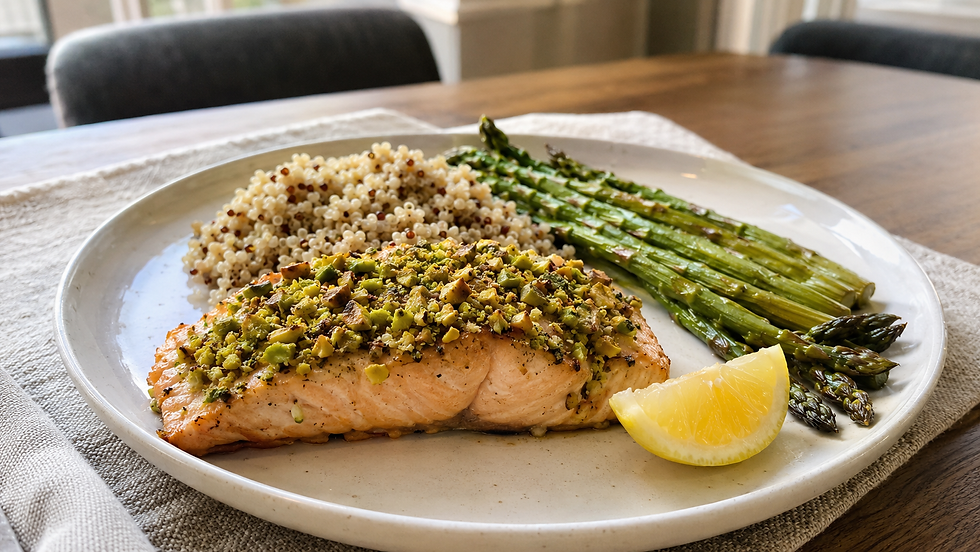
This pistachio-Dijon crusted salmon turns five ingredients into an elegant main dish with crisp texture, bright lemon and a savory finish.
Dijon mustard creates a flavorful layer that helps finely chopped pistachios adhere to the salmon. Lemon zest perfumes the crust, while a squeeze of fresh lemon balances the richness immediately before serving.
The salmon moves from refrigerator to table in approximately 25 minutes, making it practical for a busy weekday and polished enough for guests.
Why You’ll Love It
Ready in approximately 25 minutes
Provides approximately 31 grams of protein per serving
Contains no added sugar
Uses one sheet pan
Pistachios create texture without breadcrumbs
Elegant for lunch or dinner
Naturally dairy-free
Gluten-free when the Dijon mustard is certified gluten-free
How to Make Pistachio-Dijon Crusted Salmon
Recipe at a Glance

Preparation time | 10 minutes |
Cooking time | 10 to 14 minutes |
Resting time | 2 minutes |
Total time | Approximately 25 minutes |
Yield | 2 salmon fillets |
Serving size | 1 salmon fillet |
Serves | 2 |
Core ingredients | 5 |
Equipment | Rimmed sheet pan; instant-read food thermometer |
Difficulty | Easy |
Make ahead | Prepare the pistachio mixture up to two days ahead |
Freezer friendly | Cooked salmon can be frozen, although fresh is preferable |
Ingredients
2 salmon fillets, approximately 5 ounces each
1 1/2 tablespoons shelled, unsalted pistachios, finely chopped
2 1/4 teaspoons Dijon mustard
11/2 teaspoons extra-virgin olive oil, divided
1 small lemon
Optional Seasonings and Finishes
1/8 teaspoon fine sea salt
1/8 teaspoon freshly ground black pepper
1/4 teaspoon garlic powder
1/4 teaspoon smoked paprika
Chopped fresh dill
Chopped fresh parsley
Lemon wedges
Pinch of crushed red pepper flakes
Instructions
Preheat the oven. Heat the oven to 425°F. Line a rimmed sheet pan with parchment paper.
Prepare the salmon. Pat the salmon dry. Place the fillets skin-side down on the prepared pan, leaving space between them.
Prepare the lemon. Finely grate approximately ½ teaspoon of zest from the lemon. Cut the lemon into wedges and set them aside.
Make the pistachio topping. Combine the chopped pistachios, lemon zest and one teaspoon of olive oil in a small bowl. Add optional garlic powder, paprika or black pepper if desired.
Add the Dijon. Spread a thin, even layer of Dijon mustard over the top of each fillet.
Add the crust. Divide the pistachio mixture among the fillets and press it gently into the Dijon.
Finish with oil. Drizzle or brush the remaining ½ teaspoon of olive oil lightly over the crust.
Bake. Bake for 10 to 14 minutes, depending on thickness.
Check the temperature. Insert an instant-read thermometer into the thickest portion. Cook the salmon to a safe internal temperature of 145°F.
Rest and serve. Let the salmon rest for two minutes. Finish with fresh lemon and optional dill or parsley.
The Details That Make This Salmon Exceptional
Choose evenly sized fillets
Fillets of similar thickness finish cooking at approximately the same time. If the tail portions are thin, begin checking them early.
Pat the fish dry
Removing surface moisture helps the Dijon stay in place and supports a crisper pistachio topping.
Chop the pistachios finely
Small pieces form an even crust and are less likely to fall off when the salmon is served.
Use lemon zest in the crust
The zest provides concentrated citrus aroma without adding liquid that would soften the pistachios.
Use temperature rather than color
Salmon color varies by species and source. A food thermometer provides a reliable measure of safe doneness.
Rest briefly
A short rest allows the heat to settle and makes the fillets easier to transfer without disturbing the crust.
How to Complete the Plate
Serve one salmon fillet:
With roasted asparagus and a measured portion of quinoa
With green beans and a white bean salad
Over leafy greens with cucumber, radish and lemon vinaigrette
With roasted cauliflower and lentils
With sautéed spinach and a small baked sweet potato
With zucchini ribbons and a modest portion of farro
With the Broccoli and Almond Stir-Fry from the recipe collection
The salmon and pistachios provide protein and fat. Add non-starchy vegetables and, when desired, a measured higher-fiber carbohydrate to complete the plate.
Ingredient Alternatives
No pistachios?
Use finely chopped almonds, walnuts or pecans. Each nut changes the flavor and nutritional values.
Need a nut-free crust?
Use one tablespoon of unsalted pumpkin seeds or sunflower seeds, finely chopped. Check every packaged ingredient when allergy cross-contact is a concern.
Prefer another fish?
Use similarly sized trout fillets. Cooking time will differ, so confirm the internal temperature.
No Dijon mustard?
Use whole-grain mustard. Check the label for added sugar and sodium.
Prefer an air fryer?
Air-fry at 390°F for approximately seven to ten minutes, depending on thickness and appliance. Confirm that the center reaches 145°F.
Make-Ahead Instructions
Chop the pistachios and combine them with the lemon zest up to two days ahead. Refrigerate in a covered container.
The salmon can be placed on the prepared pan and coated with Dijon up to two hours before baking. Add the pistachio mixture immediately before it enters the oven so the crust stays crisp.
Storage and Reheating
Cool leftovers promptly and refrigerate in an airtight container within two hours.
Use within three days.
Reheat in a 300°F oven until steaming hot, or enjoy cold over a salad. Gentle reheating protects the salmon from drying.
Dr. Cheryl’s Holistic Perspective: Why This Recipe Supports a More Balanced Meal
Salmon provides protein and is a source of long-chain omega-3 fatty acids. The American Heart Association recommends including two servings of fish each week, particularly fatty fish, within an overall heart-supportive eating pattern.
The National Institute of Diabetes and Digestive and Kidney Diseases includes fish as a protein choice in the Diabetes plate method. Pairing this salmon with non-starchy vegetables and a thoughtfully portioned higher-fiber carbohydrate creates a more complete plate.
Pistachios add texture, unsaturated fat, plant-based protein and a small amount of carbohydrate. Dijon mustard contributes flavor and sodium, so brand and quantity matter when sodium is an individual concern.
No single seafood meal determines heart health or glucose response. The larger eating pattern, serving size, preparation method, medication, activity and individual response all remain relevant.
Nutritional Values
Per serving: 1 five-ounce salmon fillet with one-half of the crust
Calories: 350
Carbohydrate: 3 g
Protein: 31 g
Fiber: 1 g
Fat: 24 g
Nutrition values are estimates. Salmon species, fillet size, Dijon brand and the amount of oil retained affect the final values. Optional seasonings and accompaniments are not included.
Frequently Asked Questions
What temperature should salmon reach?
The FoodSafety.gov guidance for people at increased risk of foodborne illness identifies seafood cooked to 145°F as a safer choice than raw or undercooked seafood.
Should I remove the salmon skin?
No. Baking the fillets skin-side down helps protect the fish and makes it easier to lift the cooked flesh away from the skin.
Is this recipe low in carbohydrate?
The salmon and topping contain approximately 3 grams of carbohydrate per serving. Side dishes determine most of the meal’s carbohydrate.
Is the recipe suitable for someone with a tree-nut allergy?
Not with pistachios. Use a suitable seed alternative only when it is safe for the individual and cross-contact has been addressed.
Does salmon lower blood glucose?
This recipe does not make that claim. Salmon provides protein and fat and contains very little carbohydrate. Individual glucose response depends on the complete meal and other personal factors.
Can frozen salmon be used?
Yes. Thaw it safely in the refrigerator and pat it thoroughly dry before adding the Dijon.
Can the recipe be doubled?
Yes. To make four servings, double every ingredient and leave enough space between the fillets for air to circulate. Use two pans if one pan would be crowded.
Enjoy!


Comments