.png)
Self-Care for Brain Health and Diabetes
- Dr Cheryl

- 4 hours ago
- 6 min read
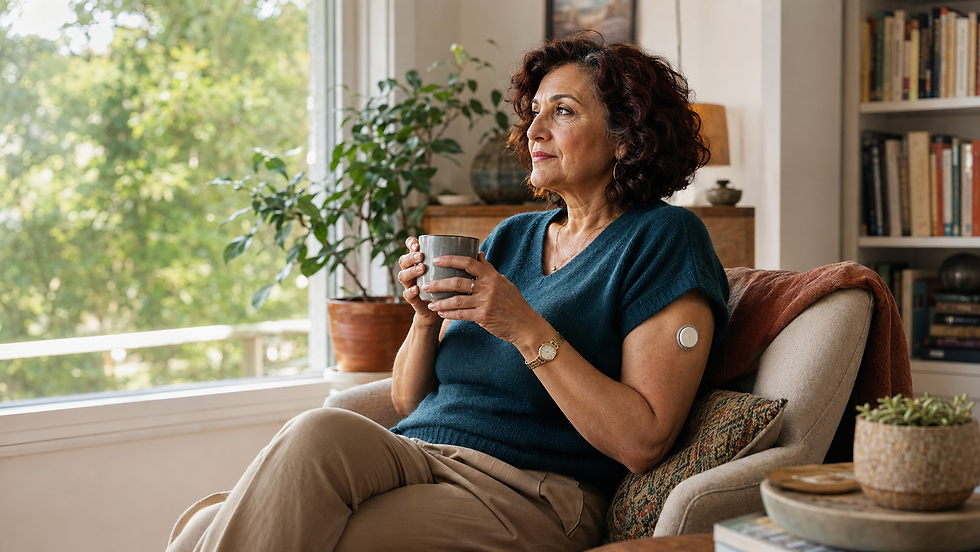
When people hear the words self-care, they often picture spa days, expensive retreats, or long afternoons with nothing to do.
Real self-care looks very different.
It's choosing to go to bed on time because tomorrow matters.
It's preparing a healthy lunch instead of skipping another meal.
It's taking a walk after a busy day to clear your mind.
It's saying "no" when your schedule is already full.
For people living with Diabetes, self-care isn't a luxury.
It's one of the most practical ways to support your brain, your blood sugar, and your overall wellbeing.
The encouraging part is that self-care doesn't have to be complicated.
The smallest daily habits often have the greatest long-term impact.
Why Self-Care for Brain Health and Diabetes Matters
Your brain is working every minute of every day.
It helps you make decisions, solve problems, remember important moments, manage emotions, and navigate daily life.
To perform those tasks well, it needs regular opportunities to rest, recover, and recharge.
Without enough sleep, downtime, movement, nutritious food, or stress management, it's easy to feel mentally exhausted.
Many people try to push through those feelings.
Unfortunately, our brains don't perform better simply because we ask them to.
The National Institute on Aging emphasizes that quality sleep is essential for healthy brain function, memory, and overall wellbeing. The Alzheimer's Association also highlights stress management, physical activity, healthy eating, and social connection as important habits for supporting long-term brain health.
These recommendations align closely with the lifestyle habits that also support living well with Diabetes.
Self-Care Isn't Selfish
Many people, especially those who spend their lives caring for others, place themselves at the bottom of the priority list.
Work comes first.
Family comes first.
Friends come first.
Appointments.
Responsibilities.
Deadlines.
By the time the day is over, there's very little energy left for themselves.
Over time, that pattern can leave you physically and mentally depleted.
I've learned that caring for yourself isn't taking something away from the people you love.
It's giving yourself the energy to keep showing up for them.
Self-care isn't selfish.
It's responsible.
Five Self-Care Habits That Support Brain Health and Diabetes
Protect Your Sleep
Sleep is one of the most valuable forms of self-care.
A consistent bedtime, a relaxing evening routine, and limiting screens before bed all help support clearer thinking, healthy blood sugar management, and better energy the next day.
Make Time to Recharge
Your brain wasn't designed to stay "on" every waking minute.
A few quiet moments with a book, sitting outside, listening to music, journaling, or simply enjoying a cup of tea without distractions can help your mind reset.
These moments don't waste time.
They restore it.
Stay Connected
Meaningful conversations and supportive relationships contribute to emotional wellbeing and healthy aging.
Whether it's lunch with a friend, joining a walking group, volunteering, or calling a family member, connection nourishes more than the heart.
It supports the brain, too.
Spend Time in Nature
Fresh air, natural light, and green spaces often help us feel calmer and more present.
A walk through your neighbourhood, gardening, or sitting on your balcony with your morning coffee can become simple but meaningful acts of self-care.
Give Yourself Grace
Perhaps the most important habit of all is learning to speak to yourself with kindness.
You won't have perfect days.
No one does.
Responding with compassion instead of criticism helps reduce unnecessary stress and makes it easier to return to healthy habits tomorrow.
Small Moments Matter
One of the biggest myths about self-care is that it requires large blocks of free time.
In reality, many of the most meaningful habits take only a few minutes.
Stepping outside for fresh air.
Stretching between meetings.
Preparing tomorrow's lunch this evening.
Turning your phone off thirty minutes before bed.
Taking five slow breaths before responding to a stressful email.
These choices may seem insignificant.
Repeated consistently, they become part of a lifestyle that supports both your brain and your Diabetes.
You'll find more practical ideas in our articles on exercise for brain health and Diabetes and the best foods for brain health and Diabetes, where small daily choices create lasting health benefits.
The Holistic Perspective
For many years, I believed pushing through exhaustion meant I was being productive.
Living with Diabetes taught me otherwise.
I've learned that rest isn't something I earn after I've finished everything on my to-do list.
It's something my body and brain need so I can continue doing the things that matter most.
Some days that means taking a walk.
Other days it means saying no to one more commitment or getting to bed earlier.
Those choices aren't signs of weakness.
They're part of how I care for myself so I can continue caring for others.
A Client's Story
Fernanda, a busy solopreneur, told me she couldn't remember the last time she had done something just for herself.
Between work, family responsibilities, and managing Diabetes, every day felt like she was constantly trying to catch up.
We didn't overhaul her schedule.
Instead, she committed to three small changes.
A ten-minute walk after lunch.
Reading for fifteen minutes before bed instead of scrolling on her phone.
Enjoying her morning coffee without checking emails.
Several weeks later she shared something that surprised her.
She felt calmer.
More focused.
More patient with her family.
Nothing dramatic had changed.
She had simply started treating herself as someone worth caring for.
Frequently Asked Questions
What is self-care for brain health and Diabetes?
Self-care for brain health and Diabetes includes daily habits that support your physical, mental, and emotional wellbeing, such as quality sleep, stress management, regular movement, healthy eating, meaningful relationships, and taking time to recharge.
Does self-care really affect brain health?
Yes. Healthy lifestyle habits help support memory, concentration, mood, and overall brain function while also contributing to better Diabetes management.
How much time should I spend on self-care each day?
Self-care doesn't have to take hours. Even a few intentional minutes each day can make a meaningful difference when those habits are practised consistently.
What's the easiest place to begin?
Choose one habit that feels realistic for your current lifestyle. Going to bed a little earlier, taking a short walk, preparing a healthy meal, or setting aside quiet time each day are all excellent places to start.
Ready to Prioritize Your Health?
Taking care of yourself isn't about doing more.
It's about making thoughtful choices that help you feel your best so you can continue enjoying the people and experiences that matter most.
If you're ready to create a sustainable approach to living well with Diabetes, I'd love to help.
During your Complimentary Diabetes Wellness Connection Call, we'll discuss your current routines, your biggest challenges, and practical strategies that support your brain, your blood sugar, and your overall wellbeing.
There's no pressure and no obligation.
It's simply an opportunity to gain clarity and discover what your next best step could look like.
Book your Complimentary Diabetes Wellness Connection Call today and begin building a healthier, more balanced approach to living well with Diabetes.
Final Thoughts
Self-care isn't something extra you fit into your life.
It becomes part of how you live your life.
Every restful night.
Every nourishing meal.
Every walk.
Every boundary you set.
Every kind thought you offer yourself.
Those choices strengthen more than your brain.
They strengthen your ability to live well with Diabetes today while protecting your health for years to come.
ABOUT THE AUTHOR

Dr. Cheryl
Dr. Ac., C.H., RDH
Dr. Holistic Studies, Dr. Acupuncture
Diabetes Wellness Strategist & Coach
Creator & CEO of Holistic Diabetes Solutions
8 X International Best-Selling Author
As a woman living with diabetes for over 30 years, Dr. Cheryl understands the journey firsthand. When she was diagnosed, she received the same outdated advice her grandmother was given for over four decades, who relied primarily on medication, suffered from deteriorating health and eventually lost her life to diabetes. Fueled by this experience, Dr. Cheryl was compelled to seek a better way. Through countless research studies and trials, she developed the winning holistic approach: the Diabetes Success System which merges traditional wisdom with today’s best holistic self-care practices. It has revolutionized diabetes management by providing a trusted way to maintain consistent and predictable healthy blood sugar levels. Join the thousands of people worldwide who have been empowered by Dr. Cheryl's approach and start living your healthiest life.
_______________________
PROFESSIONAL DISCLAIMER
The material and content contained in this platform is for overall general diabetes health and education information only. It is not intended to constitute medical advice or to be a substitution for professional medical recommendations, diagnosis or treatment. All specific medical questions or changes you make to your medication and/or lifestyle should be discussed and addressed with your primary healthcare provider. Having the right mindset, doing the right movements at the right times of day, and eating foods that help keep blood sugar, insulin, and inflammation manageable can dramatically reduce your risk of the all-too-common complications of Diabetes, increase your energy levels and have you feeling your best every day.


Comments